Best Polycarbonate Tube Manufacturer in China?
Choosing the best polycarbonate tube manufacturer in China requires more than comparing online prices. A reliable supplier should demonstrate material knowledge, stable production, and practical quality control. Polycarbonate tubes may look simple, but wall thickness, clarity, impact strength, and dimensional tolerance can affect performance significantly.
An experienced manufacturer should explain resin grades, extrusion methods, surface finishing, and application limits clearly. Ask for technical data, sample measurements, and production photos. A transparent supplier will usually discuss tolerances instead of promising perfection. That matters. Small differences can affect assembly, sealing, or optical performance.
Factory experience also deserves close attention. Review inspection procedures for diameter, wall thickness, color consistency, and surface defects. Confirm whether the supplier can provide batch records and test reports from recognized laboratories. Communication is another useful test. Can the team answer detailed questions without vague marketing language?
No supplier is ideal for every project. A manufacturer skilled in lighting tubes may not understand medical equipment requirements. A low quotation may also hide weaker materials or limited inspection. This guide examines practical factors for evaluating Chinese polycarbonate tube manufacturers, including technical capability, customization, quality assurance, production capacity, and customer support. The goal is not to name a supplier too quickly. It is to identify evidence that supports a dependable decision. Real projects need more than attractive samples. They need consistent tubes after repeated production runs.
What Makes a Polycarbonate Tube Manufacturer the Best in China?
What Makes a Polycarbonate Tube Manufacturer the Best in China?
A strong manufacturer proves consistency, not just low pricing. Ask for tube dimensions, wall-thickness tolerances, and batch inspection records. Check whether samples match production orders. A clear answer matters.
Material quality also deserves evidence. Grand View Research’s 2024 polycarbonate market analysis estimated the global market at about US$20.8 billion in 2023, reflecting broad demand across industrial and construction uses. Market growth alone does not prove supplier quality. Request material specifications, optical or mechanical test results, and details on UV-resistant grades when outdoor use is planned. For transparent tubing, inspect samples under angled light; haze, scratches, and uneven walls can be easy to miss in photographs.
Manufacturing control separates dependable partners from uncertain ones. Ask how they monitor extrusion temperature, cooling, cutting, and dimensional checks. A competent supplier should explain these steps plainly and provide traceable inspection documents. ISO 9001 certification can indicate a documented quality-management system, but it does not guarantee every tube is defect-free. Verify the scope and review recent records. Communication counts, too. Small delays or vague replies may be warning signs—though one awkward email is not a verdict. Test a sample under real operating conditions before placing a large order.
Key Polycarbonate Tube Products and Manufacturing Capabilities
Polycarbonate tubes serve applications that need impact resistance, clear visibility, and dependable dimensional control. Common products include clear and tinted tubes, thin-wall tubing, and larger-diameter sections for protective covers, equipment housings, and fluid or light-display systems. Tube dimensions, wall thickness, color, and cut length can be specified to suit the assembly. Small details matter. A slight variation in wall thickness may affect fit, sealing, or the appearance of a finished unit.
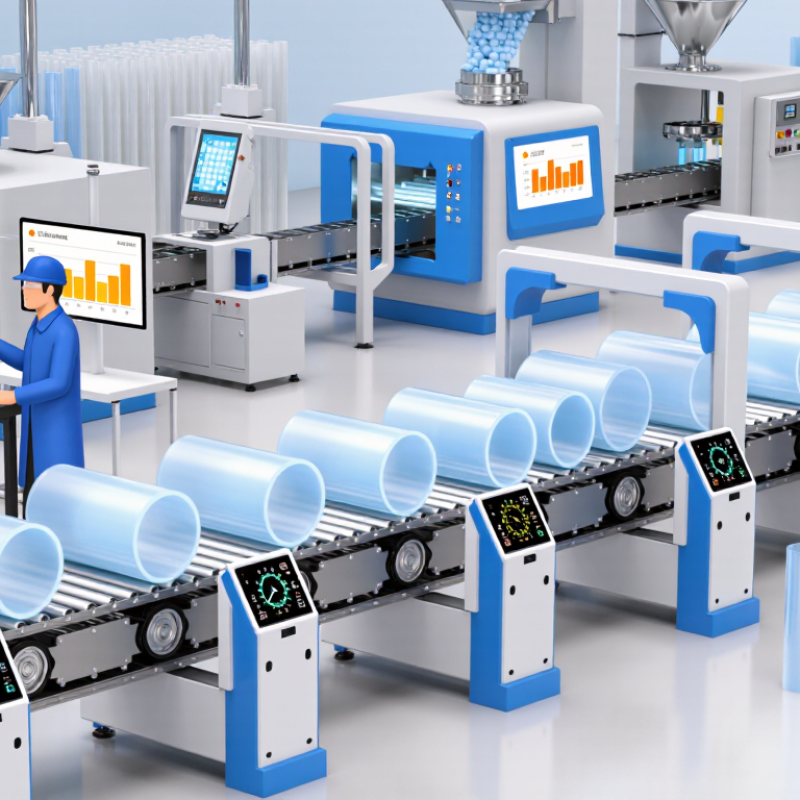
Manufacturing capabilities often include extrusion, custom sizing, cutting, and secondary machining. During extrusion, operators monitor temperature, cooling, and pull speed to help maintain a consistent profile. Measurements of outer diameter and wall thickness can reveal drift before a full production run is affected. Samples should also be checked for clarity, surface marks, and fit with mating parts. A tube can look excellent and still miss a tight tolerance.
For custom projects, useful information includes the operating environment, required dimensions, expected loads, and whether the tube needs to remain optically clear. Polycarbonate offers strong impact resistance, but it can scratch, and some chemicals may cause stress cracking. These limits deserve attention during material selection. Prototype testing is sensible, even when drawings appear complete; real assemblies sometimes expose a clearance problem that was easy to miss on screen.
Material Quality, Testing Standards, and Product Certifications
Best Polycarbonate Tube Manufacturer in China?
Material Quality, Testing Standards, and Product Certifications
Choosing a polycarbonate tube manufacturer requires more than comparing prices. Material consistency often decides whether a tube survives pressure, heat, and repeated handling. Experienced manufacturers should provide resin batch records, processing conditions, and traceable inspection reports. These details reveal how seriously they control production.
High-quality tubes should show stable dimensions, smooth inner walls, and consistent transparency. Important checks include outer diameter, wall thickness, impact strength, heat resistance, and light transmission. For demanding applications, manufacturers may perform pressure, aging, and chemical-resistance tests. Test methods should be clearly identified, not described with vague claims. Ask for sample data.
Certification also needs careful review. ISO 9001 can indicate a controlled quality system, but it does not automatically prove product performance. Material declarations, RoHS, REACH, or application-specific documentation may be relevant. Confirm the certificate’s scope, issuing body, validity, and covered factory location. A certificate alone is not enough.
Independent laboratory testing adds useful confidence, especially for new suppliers or customized sizes. Still, testing every detail may increase cost and production time. That trade-off deserves honest discussion. In practice, the strongest manufacturer is one that shares limitations, corrects inconsistent batches, and keeps records from raw material intake to final packing. Small gaps can matter.
Best Polycarbonate Tube Manufacturer in China? — Material Quality, Testing Standards, and Product Certifications
Typical density of common transparent plastics (g/cm³). Polycarbonate density is commonly around 1.20 g/cm³; actual values vary by grade and formulation. Density alone does not establish product quality or identify the best manufacturer.
For a supplier evaluation, request grade-specific technical data and test reports. Density can be measured using ASTM D792 or ISO 1183-1; also verify relevant mechanical and optical test results, dimensional tolerances, and applicable product certifications for the intended use.
How to Evaluate Customization, Production Capacity, and Lead Times
Choosing the best polycarbonate tube manufacturer in China requires more than comparing unit prices. Customization shows whether the factory understands engineering details. Ask for drawings, tolerance ranges, tube diameter, wall thickness, length, color, and surface finish. A capable team should explain what extrusion can achieve and where tooling changes are necessary. Request a sample made through the same process as the final order. Samples from another process can mislead. Very polished samples prove little.
Production capacity needs evidence. Review extrusion line numbers, monthly output, shift arrangements, and inspection points. Ask how the manufacturer handles peak-season orders. A factory may quote 500,000 tubes monthly, but that figure could include every size and grade. Request capacity data for your specification. Check whether resin drying, cutting, drilling, and packaging happen in-house. These steps can create hidden delays. A production visit, live video audit, or dated machine record adds credibility. Do not rely on photographs alone.
Lead time should cover tooling, sample approval, raw-material preparation, mass production, and shipment. Written milestones make delays easier to identify. Ask for a realistic schedule, not the fastest promise. Confirm how design changes affect delivery. One small diameter adjustment can restart tooling. That detail is often missed. No evaluation is perfect. Reliable manufacturers report defects, not only successful batches. Request inspection records, dimensional reports, and packaging tests. If answers remain vague, pause before paying a deposit. The cheapest quote may become expensive after missed launch dates.
Choosing the Right Chinese Polycarbonate Tube Manufacturing Partner
Best Polycarbonate Tube Manufacturer in China?
Choosing the Right Chinese Polycarbonate Tube Manufacturing Partner
Choosing a Chinese polycarbonate tube manufacturer requires more than comparing unit prices. In practical sourcing, production consistency matters most. Ask how the factory controls outer diameter, wall thickness, transparency, and cut length. A reliable supplier should provide dimensional tolerances and inspection records for every production batch.
Look closely.
Experienced manufacturers explain their extrusion process clearly. They should discuss resin grades, UV resistance, impact strength, and operating temperatures. Request samples made with the same tooling and material planned for mass production. Check each sample with calipers. Inspect the surface under strong light. Small marks can reveal unstable cooling or poor handling.
Factory verification also deserves attention. Review equipment lists, quality procedures, material traceability, and independent test reports. Confirm whether the supplier can support custom colors, drilling, flaring, or protective packaging. Communication is another practical test. Technical answers should be specific, not vague promises. A lower quotation may hide higher scrap rates, weaker packaging, or inconsistent tolerances. I have found that clear drawings prevent many disputes, although they cannot correct careless production. Even a capable factory may miss a detail when specifications change quickly. Keep approval samples, inspection standards, and delivery terms in writing. Evaluate the partnership through trial orders before committing to long-term volumes.