10 Best Custom Plastic Extrusion Manufacturers?

The global plastics industry is expanding, but buyers face a difficult question: which manufacturer can deliver consistent, application-ready profiles? Grand View Research estimates that the global plastic extrusion machine market reached approximately USD 7.7 billion in 2023. The firm also projects continued growth through 2030. Meanwhile, the OECD reports that global plastics production increased from 234 million metric tons in 2000 to 460 million metric tons in 2019. These figures reveal strong demand, but they also expose growing pressure on material efficiency, energy use, and process control.

Custom plastic extrusion is not simply a matter of pushing resin through a die. It involves temperature balance, die design, cooling speed, dimensional tolerance, and long-term material performance. John R. Wagner Jr., an established extrusion author and consultant, describes extrusion as “a continuous process.” That short observation matters. A small temperature drift can create surface lines, uneven walls, or rejected profiles several meters later.

This guide examines 10 best custom plastic extrusion manufacturers through practical criteria. These include engineering experience, tooling capability, quality certifications, material knowledge, production flexibility, and customer support. Company scale alone is not enough. A large supplier may overlook a low-volume prototype, while a smaller specialist may lack global capacity. That is the uncomfortable part.

No ranking can remove project-specific uncertainty. Buyers should still request samples, tolerance data, testing records, and clear lead times. The strongest manufacturers combine repeatable production with honest technical communication. Expect trade-offs. Reliability is built during the details.

10 Best Custom Plastic Extrusion Manufacturers?

What Custom Plastic Extrusion Manufacturers Do

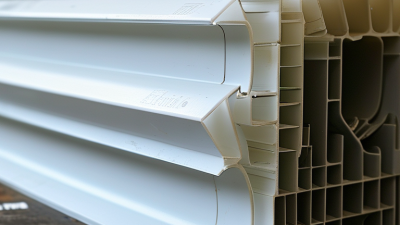
Custom plastic extrusion manufacturers turn a product concept into a consistent, usable profile. They review drawings, dimensions, material requirements, and expected production volume. Their engineers may suggest changes to wall thickness, corners, holes, or tolerances. Small design changes can reduce waste and prevent weak areas.

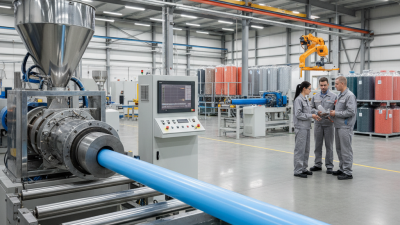
The process begins with selecting suitable plastic resin and additives. The team then designs a custom die for the required shape. Heated material moves through the die before entering calibration, cooling, and cutting equipment. Operators monitor temperature, speed, pressure, and surface quality during production. They also inspect samples using gauges, measuring tools, and visual checks. Important results include dimensions, color consistency, strength, and resistance to heat or chemicals.

No production line runs perfectly.

Reliable manufacturers document each batch and investigate defects instead of hiding them. They may adjust cooling conditions, replace worn tooling, or refine the extrusion speed. Prototype runs can expose problems that drawings miss. That feedback is valuable, although it can delay the schedule. Manufacturers also help with packaging, labeling, and delivery requirements. For regulated applications, they should provide clear material records and test documentation. Buyers should ask about quality controls, tolerance capability, lead times, and technical support before approving a supplier. A low quoted price can become expensive when tooling changes or rejected profiles appear later.

Key Criteria for Evaluating Plastic Extrusion Manufacturers

Choosing among the 10 best custom plastic extrusion manufacturers requires more than comparing hourly prices. Start with process control, material knowledge, and documented results. ISO’s 2023 Survey recorded more than 1.26 million ISO 9001 certificates worldwide, so certification is useful, but it is not proof of extrusion skill. Ask for control plans, melt-temperature records, dimensional inspection methods, and recent samples from similar profiles.

Production capacity must match the project’s real demands. Check screw diameter, die-design experience, line speed, tolerances, and tooling maintenance. A supplier may promise tight tolerances, yet small profile changes can affect cooling, warping, and installation. Request first-article data and capability studies. Cpk values above 1.33 are often preferred for stable production, although the correct target depends on risk and specification.

Sustainability deserves measurable evidence. PlasticsEurope reported global plastics production of about 414 million tonnes in 2023, increasing pressure on material efficiency and waste reduction. The OECD’s Global Plastics Outlook found that only 9% of plastic waste was recycled in 2019. Therefore, evaluate recycled-resin traceability, scrap-recovery rates, energy monitoring, and design-for-recycling support. Ask for test reports, not polished claims. Visit the plant if possible. Look at resin storage, labeling, maintenance habits, and rejected parts. A clean showroom can mislead. I would also examine communication during a tooling correction, because responsiveness under pressure often reveals more than a sales presentation.

Key Criteria for Evaluating Plastic Extrusion Manufacturers

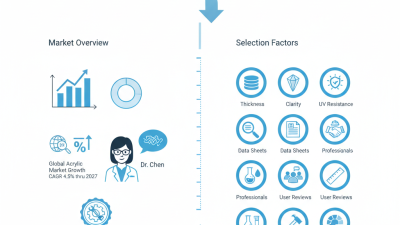
Recommended evaluation weights for comparing custom plastic extrusion suppliers. The framework focuses on measurable quality, engineering, production, and supply-chain capabilities rather than company or brand data.

Quality systems and dimensional capability typically receive the highest weighting because extrusion performance depends on process consistency, die control, material stability, and inspection discipline. Material traceability, tooling expertise, production capacity, delivery reliability, and sustainability should also be verified during supplier audits.

10 Leading Custom Plastic Extrusion Manufacturers

10 Leading Custom Plastic Extrusion Manufacturers

The 10 leading custom plastic extrusion manufacturers are not selected by size alone. Strong candidates combine process experience, stable tooling, and documented quality controls. They should handle profiles, tubing, seals, and complex sections with consistent dimensions. In practical sourcing, I look for resin knowledge, die-design capability, and responsive engineering support.

Industry demand supports this focus. Grand View Research reported that the global plastic extrusion machine market was valued at approximately USD 8.16 billion in 2023. Its report also projects continued growth through 2030. PlasticsEurope’s Plastics—The Fast Facts 2024 recorded global plastics production of about 413.8 million tonnes in 2023. These figures suggest scale, but they do not prove manufacturing reliability. A large factory may still struggle with a narrow tolerance or a difficult recycled compound. No ranking is perfect.

Tips: Request sample profiles, dimensional inspection records, and material certificates before approval. Ask how the manufacturer controls die wear, cooling temperature, and line speed. A useful trial should test the real resin and production speed. Check communication during tooling changes. It often reveals more than a polished sales presentation. Also, define acceptable cosmetic flaws in writing. This step is easy to overlook, and later disagreements can become expensive.

10 Best Custom Plastic Extrusion Manufacturers? - 10 Leading Custom Plastic Extrusion Manufacturers

Anonymized comparison of custom plastic extrusion capabilities and typical project specifications

Rank Manufacturer Profile Primary Custom Extrusion Capability Common Thermoplastics Typical Profile Size Typical Dimensional Tolerance Available Finishing Secondary Operations Quality & Compliance Typical Tooling Lead Time
1 Profile A Complex profiles Tight tolerances PVC, ABS, PC, PMMA, TPE Up to approximately 150 mm in width About ±0.10–0.25 mm, depending on geometry and polymer Color matching, matte, gloss, co-extrusion, protective film Cutting, drilling, punching, bending and assembly ISO 9001-based quality management; dimensional inspection Approximately 3–6 weeks
2 Profile B Rigid profiles Construction components uPVC, ASA, ABS, HDPE, PP Up to approximately 250 mm in width About ±0.20–0.50 mm for standard sections Woodgrain, laminating, embossing, co-extrusion and surface coating Saw cutting, end milling, welding and drilling Material traceability and batch inspection Approximately 4–8 weeks
3 Profile C Flexible tubing Medical and laboratory parts TPU, TPE, PVC, silicone-compatible thermoplastics Tubing outside diameter commonly 1–50 mm About ±0.05–0.20 mm for controlled tubing dimensions Translucent, colored, radiopaque and multi-layer construction Cut-to-length, printing, flaring and kit assembly Documented process controls; customer-specific validation available Approximately 4–10 weeks
4 Profile D Electrical profiles Insulation components PA, PVC, PC, PBT, PE and flame-retardant compounds Typical wall thickness from 0.5–8 mm About ±0.10–0.30 mm, subject to material shrinkage Custom colors, low-smoke compounds, UV stabilization and co-extrusion Cutting, slotting, drilling, labeling and harness preparation Electrical testing and lot-based dimensional inspection Approximately 3–7 weeks
5 Profile E Automotive trim Sealing systems EPDM alternatives, TPE, TPV, PVC, PA and PP Common profile width of 5–100 mm About ±0.20–0.50 mm for production profiles Flocked surfaces, adhesive backing, flocking, co-extrusion and coating Cutting, corner forming, splicing and clip insertion Automotive-grade process documentation may be available Approximately 5–10 weeks
6 Profile F Small-batch production Rapid prototyping ABS, PLA, TPU, TPE, PC, PETG and PP Typical profile width from 2–80 mm About ±0.15–0.50 mm, depending on order volume Custom color, polished, textured and printed surfaces Cutting, drilling, deburring and simple assembly First-article inspection and sample approval available Approximately 2–5 weeks
7 Profile G Large structural profiles Industrial applications HDPE, PP, PVC, PC, ABS and glass-filled polymers Up to approximately 300 mm in width About ±0.30–0.80 mm for large sections UV-resistant compounds, embossing, coating and co-extruded layers Cutting, machining, welding and metal insert integration Material certificates and production batch records Approximately 6–12 weeks
8 Profile H Food and packaging parts Hygienic applications PP, PE, PET, EVOH and food-contact grades of PVC Typical wall thickness from 0.3–5 mm About ±0.10–0.40 mm for standard geometries Transparent, translucent, colored and barrier-layer construction Cutting, perforating, sealing and packaging Food-contact documentation and migration testing may be supported Approximately 4–8 weeks
9 Profile I Fiber-reinforced profiles High-strength components PA-GF, PBT-GF, PC-GF, PP-GF and mineral-filled polymers Typical profile width from 5–120 mm About ±0.20–0.60 mm, depending on reinforcement content Textured, coated, colored and UV-resistant surfaces Precision cutting, drilling, milling and insert installation Mechanical-property testing and dimensional reports Approximately 5–10 weeks
10 Profile J Recycled-material profiles Sustainable product design Recycled HDPE, recycled PP, recycled PET, TPE and bio-based blends Typical profile width from 5–180 mm About ±0.25–0.70 mm, depending on recycled content and design Natural, speckled, matte, embossed and custom-colored finishes Cutting, drilling, punching, printing and assembly Recycled-content declarations and batch traceability may be available Approximately 4–9 weeks
Note: Capability ranges are typical custom plastic extrusion industry specifications. Actual tolerances, profile dimensions, tooling schedules, material approvals and compliance documentation depend on the final CAD design, resin grade, order volume and application requirements.

Industries and Applications Served by Each Manufacturer

10 Best Custom Plastic Extrusion Manufacturers?

Custom plastic extrusion manufacturers serve very different production environments. Building and construction remains a major outlet, producing window profiles, seals, conduit, drainage channels, and insulation components. Grand View Research identifies construction as a leading application area in the global plastic extrusion market, supported by demand for lightweight and durable materials.

Automotive suppliers require tight tolerances, low weight, and resistance to heat, oils, and vibration. Their extruded products include weather seals, fluid channels, cable guides, and interior trim. Electrical and electronics manufacturers often need flame-retardant profiles, wire insulation, protective tubing, and miniature channels. Medical-device producers demand clean processing, controlled dimensions, and traceable materials for tubing, fluid handling, and laboratory equipment. Small errors matter.

Packaging applications include edge guards, flexible films, barrier layers, and custom protective sections. Agriculture uses irrigation tubing, greenhouse profiles, crop-support channels, and filtration components. According to MarketsandMarkets, rising demand for lightweight plastic products continues to support extrusion growth across packaging, construction, and automotive sectors.

Industrial manufacturers commonly purchase wear strips, conveyor guides, gaskets, tank linings, and structural profiles. Transportation projects may require rail, marine, or aerospace-grade components, although certification requirements can narrow the supplier list. A practical comparison should examine die-design experience, material expertise, testing capacity, and production volume. Rankings can mislead. The best manufacturer for medical tubing may perform poorly on a large architectural profile. Assessment should match the application, not merely the catalog.

How to Select the Right Plastic Extrusion Partner

10 Best Custom Plastic Extrusion Manufacturers? How to Select the Right Plastic Extrusion Partner

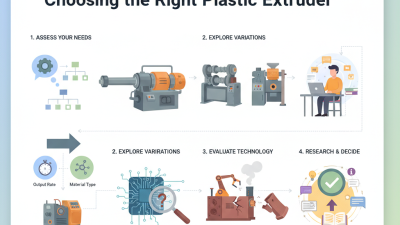
Choosing an extrusion partner requires more than comparing hourly prices. Plastics Europe reported 413.8 million tonnes of global plastics production in 2023. That scale increases pressure on material control, energy use, and production consistency. A capable supplier should explain resin selection, die design, cooling methods, and dimensional tolerances in practical terms. Ask for recent inspection records, process-control plans, and traceability documents. Vague answers deserve attention.

Grand View Research estimated the global plastic extrusion machine market at approximately USD 7.5 billion in 2023. Its forecast also indicates continued growth through 2030. This suggests strong capacity, but capacity alone proves little. Review the supplier’s tooling experience, maximum profile size, line speed, and trial-production process. Request samples from comparable applications, not only attractive showroom pieces. Check whether the supplier measures warpage, wall thickness, color variation, and surface defects consistently. One weakness remains easy to miss: a successful sample may not represent stable monthly production.

Tips: Define critical dimensions before requesting quotations. Include resin grade, operating temperature, packaging, forecast volume, and acceptable tolerances. Visit the facility when possible. Watch a line changeover, inspect material storage, and ask how rejected parts are recorded. Compare total cost, not unit price alone. My own checklist sometimes overvalues technical documents. Operator experience and honest communication can matter just as much.