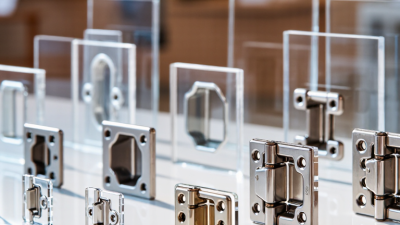
What Are the China Top 10 Acrylic Hinges Suppliers?
Choosing reliable acrylic hinges requires more than comparing catalogue prices. A supplier may offer clear, polished hardware, yet overlook load limits, screw alignment, or long-term brittleness. This guide examines China’s top 10 acrylic hinges suppliers through practical purchasing criteria. These include material clarity, hinge thickness, opening cycles, production consistency, customization, packaging, and export experience.
Dr. Susan E. M. Selke, a respected polymer and packaging specialist, offers a useful principle: “A material’s performance depends on how it is designed, processed, and used.” That lesson applies directly to acrylic hinges. A transparent hinge installed on a display case must resist repeated movement without whitening, cracking, or loosening. Small details matter. Edge finishing matters. Hole tolerance matters. Even protective film can reveal a supplier’s quality discipline.
The ranking considers manufacturers, trading companies, and specialized hardware producers. It also separates attractive samples from dependable mass production. Some suppliers may excel at custom colors but provide limited testing evidence. Others may offer stable output yet lack flexible communication. That difference deserves attention. No list can replace sample testing, factory verification, and clear technical drawings. Buyers should inspect hinge movement, fastener fit, surface defects, and carton protection before placing a large order.
This introduction is not a perfect shortcut. Supplier capabilities can change, and online information may become outdated. Still, it provides a focused starting point for finding acrylic hinges that balance appearance, durability, price, and practical performance.
How Acrylic Hinges Are Evaluated in the China Supplier Market
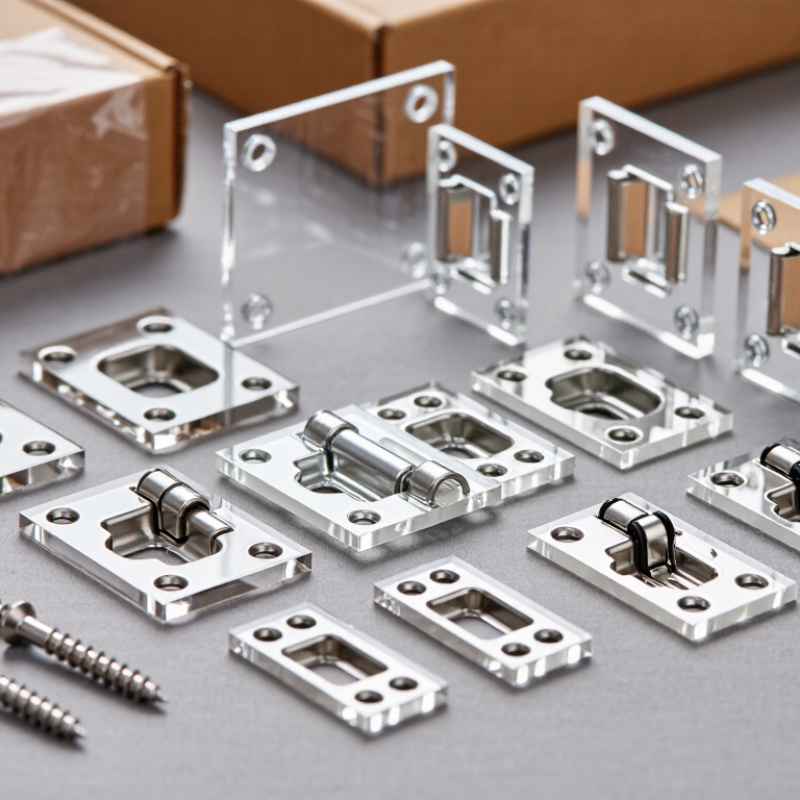
Evaluating China’s top acrylic hinge suppliers requires more than comparing catalog photos. In practical sourcing, buyers should inspect acrylic clarity, edge finishing, pin alignment, and opening resistance. A hinge may look polished but still crack near the screw hole. That detail matters.
Reliable suppliers provide material specifications, dimensional drawings, batch records, and test samples. Ask whether the acrylic is cast or extruded, and confirm its thickness. Check load performance with repeated opening tests. UV exposure, temperature changes, and packaging quality also deserve attention.
Factory audits can reveal machining dust, inconsistent drilling, or weak quality controls. These findings are more useful than sales claims. Still, sample testing has limits. A small batch cannot represent every production run.
Tips:
Request at least three samples from different batches. Measure the pin diameter, hole spacing, and visible stress marks. Test each hinge on the intended panel, not a lighter substitute.
Clarify minimum order quantities, replacement policies, lead times, and inspection procedures in writing. Good communication is measurable: responses should be specific, timely, and supported by documents.
Price should remain important, but an unusually low quote may hide thinner material or unstable processing.
A careful buyer should record every result, including disappointing ones. That record supports fair supplier comparisons and more realistic purchasing decisions.
China’s Top 10 Acrylic Hinge Suppliers at a Glance
China’s acrylic hinge sector serves display cabinets, retail fixtures, light furniture, and interior projects. The ten suppliers reviewed here were screened for material quality, machining accuracy, export experience, and documented inspection procedures. This approach reflects practical sourcing conditions, not only online visibility.
UN Comtrade trade data shows China remains a major exporter of plastic hardware and furniture fittings. However, available HS codes rarely separate acrylic hinges from other plastic components. That limitation matters. It makes supplier comparison less precise than many buying guides suggest. Grand View Research also identifies strong growth across acrylic-based products, supported by retail display, construction, and customized interior demand.
The leading ten suppliers generally offer transparent acrylic, colored acrylic, or mixed-material hinge designs. Better-performing factories provide CNC cutting, polished edges, sample approval, and load testing. Ask for hinge-cycle results. Ask for resin specifications. Do not rely on photographs alone.
Small details reveal manufacturing discipline. Check screw-hole alignment under a cabinet light. Inspect cloudy edges after protective film removal. Confirm packaging strength before a long shipment. Some suppliers respond quickly but provide weak technical files. Others communicate slowly yet control production better. That trade-off deserves attention.
For reliable purchasing, compare tolerance data, minimum order quantities, replacement policies, and pre-shipment inspection records. ISO 9001 certification can support process confidence, but it does not guarantee every batch. Independent verification remains useful. Mistakes still happen, especially with custom dimensions and mixed material orders.
China's Top 10 Acrylic Hinge Suppliers at a Glance
This chart presents common acrylic panel thicknesses that buyers typically compare when evaluating acrylic hinge suppliers. The reference covers standard thickness options and does not rank or disclose individual company data.
Reference unit: millimeters (mm). Actual compatibility depends on hinge geometry, mounting method, load requirements, and panel design.
Product Ranges and Manufacturing Capabilities of Each Supplier
China’s top ten acrylic hinge suppliers differ in product range, tooling, and quality control.
One focuses on clear cast-acrylic hinges for display cases, with CNC drilling and edge polishing. Another offers colored, frosted, and UV-resistant sheets, then cuts small batches by laser. A third handles heavy display doors, using thicker panels and reinforced screw holes. Its workshop checks hinge alignment with simple jigs. A fourth produces compact hinges for boxes and signage, supporting custom hole spacing.
A fifth supplier combines acrylic machining with stainless-steel pins for improved wear resistance. It can supply transparent or tinted parts. A sixth specializes in high-volume orders, using automated cutting, deburring, and batch inspection. A seventh supports prototypes through low minimum quantities and rapid drawing revisions. This is useful. An eighth offers flame-polished edges, countersunk holes, and protective film for export packing. A ninth builds made-to-measure hinge sets for cabinets, partitions, and retail fixtures. Its technicians usually confirm dimensions before production.
The tenth supplier emphasizes engineering control. It provides CAD files, sample approval, torque checks, and inspection records. Across these factories, useful questions concern acrylic thickness, pin material, opening angle, and tested load. Some catalogs mention “standard” sizes without defining tolerance. That deserves clarification. From practical sourcing experience, polished edges may look excellent but still chip during careless assembly. Small pilot orders can expose weak holes, uneven spacing, or disappointing packaging. Capabilities sound similar. The real difference appears in process discipline, traceability, and willingness to correct drawings.
What Are the China Top 10 Acrylic Hinges Suppliers? - Product Ranges and Manufacturing Capabilities of Each Supplier
| Supplier Profile | Main Product Range | Acrylic Compatibility | Hinge Formats | Manufacturing Capabilities | Customization Options | Typical MOQ | Typical Lead Time | Quality and Export Support |
|---|---|---|---|---|---|---|---|---|
| Profile 01 | Clear display hinges Acrylic box hinges Small cabinet hinges | Cast and extruded PMMA panels; commonly used with 2–8 mm sheets. | Compact butt hinges, flat hinges, lid hinges, and screw-mounted hinges. | Injection molding, CNC trimming, drilling, deburring, and manual assembly. | Hole spacing, hinge length, screw size, transparent tint, and packaging. | 500–1,000 sets for standard designs; higher for custom tooling. | 15–30 days after sample approval. | Dimensional inspection, pre-shipment checks, carton export packing, and standard commercial documentation. |
| Profile 02 | Furniture hinges Acrylic door fittings Retail fixtures | Suitable for transparent, frosted, colored, and UV-protected acrylic panels. | Overlay hinges, inset hinges, folding hinges, and lift-lid hinges. | Metal stamping for reinforcement parts, plastic injection molding, tapping, and assembly. | Opening angle, mounting plate, surface finish, logo-free packaging, and installation kits. | 1,000 sets for stocked configurations; 3,000+ for modified designs. | 20–35 days for repeat production. | Incoming material checks, first-article inspection, batch sampling, and export labeling. |
| Profile 03 | Acrylic jewelry boxes Presentation cases Gift packaging hardware | Optimized for lightweight PMMA covers and thin acrylic box walls. | Miniature pin hinges, concealed hinges, barrel hinges, and snap-fit designs. | Precision mold making, micro-injection molding, pin insertion, polishing, and assembly. | Miniature dimensions, pin material, color matching, hinge tension, and retail packaging. | 1,000–3,000 sets depending on size and tooling requirements. | 25–40 days including tooling for new designs. | Sample confirmation, visual inspection, functional opening-cycle checks, and export cartons. |
| Profile 04 | Acrylic display stands POS fixtures Countertop cabinets | For medium-thickness acrylic panels used in retail and exhibition displays. | Removable hinges, 90-degree hinges, 180-degree hinges, and panel connectors. | CNC machining, drilling, countersinking, injection molding, and low-volume prototyping. | Panel thickness, mounting holes, angle stops, clear or smoked color, and kitting. | 200–500 sets for prototypes; 1,000+ for production orders. | 10–25 days for standard products; 30–45 days for new tooling. | Prototype support, dimensional reports on request, protective packing, and international shipping coordination. |
| Profile 05 | Bathroom accessories Acrylic medicine cabinets Light-duty enclosures | Designed for indoor applications using clear, opaque, or textured acrylic sheets. | Soft-close compatible hinges, concealed hinges, side-mount hinges, and lift-up hinges. | Injection molding, stainless-steel pin fitting, spring assembly, and functional testing. | Closing resistance, corrosion-resistant pins, mounting pattern, and custom color. | 1,000 sets for regular models; 5,000+ for fully customized programs. | 25–45 days depending on testing and component sourcing. | Salt-spray testing for metal parts when specified, assembly inspection, and export packing. |
| Profile 06 | Acrylic signage Wall-mounted cases Exhibition hardware | Compatible with clear, colored, and UV-stabilized PMMA used for indoor signage. | Flat plate hinges, removable pin hinges, wall-case hinges, and foldable joints. | Laser cutting support, CNC finishing, drilling, polishing, and hardware assembly. | Mounting holes, hinge profile, plate thickness, finish, and installation accessories. | 300–1,000 sets for standard or semi-custom products. | 15–30 days after technical drawing confirmation. | Drawing review, sample approval, batch inspection, and protective film or foam packaging. |
| Profile 07 | Acrylic pet enclosures Ventilated covers Small access doors | Suitable for thicker acrylic panels where higher load and repeated opening are required. | Heavy-duty butt hinges, continuous piano-style hinges, lift-off hinges, and latch-hinge combinations. | Reinforced injection molding, metal insert molding, CNC drilling, and cycle testing. | Load rating, opening angle, pin diameter, fastening method, and corrosion-resistant components. | 500–1,500 sets, with tooling usually required for reinforced designs. | 25–45 days for production; longer for endurance-tested designs. | Functional cycle testing, load checks, material certificates when requested, and export documentation. |
| Profile 08 | Acrylic lighting covers Electrical enclosures Instrument covers | Appropriate for transparent or diffused acrylic panels used in indoor equipment. | Compact concealed hinges, removable cover hinges, snap hinges, and service-door hinges. | Engineering plastics injection molding, CNC machining, insert assembly, and inspection fixtures. | Temperature-resistant material selection, mounting geometry, surface texture, and color. | 1,000–3,000 sets depending on resin and tooling requirements. | 30–50 days for engineered or modified parts. | Material traceability, dimensional sampling, functional inspection, and technical drawing support. |
| Profile 09 | Retail display boxes Museum cases Collectible cabinets | Designed for clear acrylic panels requiring clean appearance and low visual obstruction. | Transparent hinges, concealed lid hinges, removable hinges, and security-case hinges. | Optical-surface molding, precision machining, polishing, assembly, and appearance inspection. | Transparency level, hinge visibility, lock compatibility, hole layout, and protective packaging. | 300–1,000 sets for display applications; custom tooling may apply. | 20–40 days after approved samples. | Appearance inspection, dimensional reports, scratch protection, export cartons, and sample services. |
| Profile 10 | Custom OEM hinges Industrial covers Special-purpose fittings | Developed for specific acrylic thicknesses, loads, environments, and installation constraints. | Multi-axis hinges, torque hinges, adjustable hinges, custom joint systems, and hybrid designs. | Tool design, rapid prototyping, CNC machining, injection molding, metal fabrication, and assembly. | Fully customized geometry, material grade, load rating, opening angle, finish, and packaging. | 100–500 prototype sets; 1,000–5,000 sets for validated production. | 30–60 days for new product development and mass production setup. | Engineering drawings, prototype testing, inspection plans, batch records, and international logistics support. |
Note: MOQ and lead-time figures are typical China sourcing ranges for acrylic hinge products. Final specifications depend on material selection, tooling complexity, order quantity, testing requirements, and packaging configuration.
Quality Standards, Customization Options, and Order Requirements
What Are the China Top 10 Acrylic Hinges Suppliers?
When comparing China’s top ten acrylic hinge suppliers, inspect quality evidence before pricing. Ask for material specifications, dimensional tolerances, and load-cycle test results. Clear acrylic parts should have smooth edges, consistent thickness, and clean drilling. A 3–5 mm panel can reveal poor hole alignment quickly. Check hinge movement after repeated opening and closing. UV resistance also matters for displays near windows. Suppliers with documented inspection procedures usually provide more reliable results. Still, a certificate alone does not prove stable production.
Tips: Request two samples from different batches. Compare color, screw fit, hinge torque, and surface scratches. Ask whether testing covers temperature changes and long-term use. These small checks prevent expensive surprises.
Customization may include hinge shape, hole spacing, acrylic color, mounting angle, and packaging design. Send a drawing with exact measurements, tolerances, and application photos. Confirm whether the supplier makes tooling or charges separately.
Order requirements often include minimum quantities, sample fees, production lead times, and carton details. Request a pre-production sample before approving mass production.
In practice, the cheapest quotation may exclude testing, protective film, or replacement parts. That makes comparison less fair. A careful buyer should also confirm the inspection method and defect policy in writing. Supplier rankings can guide research, but they cannot replace direct verification.
How to Choose the Right Chinese Acrylic Hinge Supplier
A top-ten list should be a screening tool, not a purchase decision.
When choosing a Chinese acrylic hinge supplier, verify material, tooling, and production control.
Grand View Research’s 2024 acrylic market outlook projects approximately 5.7% annual growth through 2030.
Rising demand can attract inexperienced factories. That risk matters.
Request production samples, not only catalog images.
Check hole alignment with your actual panel, then measure opening torque and hinge clearance.
Ask for acrylic grade, additives, batch records, and dimensional tolerances.
A reliable supplier should explain its inspection plan clearly.
Look for
incoming-material checks, in-process sampling, and final inspection reports.
Third-party testing can verify UV resistance and load performance.
Measure twice.
Supplier evaluation should also include communication and delivery evidence.
The World Bank’s 2023 Logistics Performance Index gives China a logistics score of 3.7 out of 5, but performance still differs between regions and factories.
Request recent on-time delivery data, corrective-action records, and a realistic lead-time schedule.
Confirm packaging through a pilot shipment; acrylic parts can scratch when separators are too thin.
A factory audit is useful, although it cannot replace repeated quality checks.
I would also compare three quotations using identical specifications.
The lowest price often hides weaker resin, limited inspection, or unstable tooling.
Not perfect.
Even experienced buyers can overlook mold maintenance, replacement-pin availability, or small tolerance changes between batches.
Include these points in the purchase agreement.
Related Posts
-
2026 Top Acrylic Hinges Types for Global Buyers
-

Top Benefits of Using Plexiglass Tubes for Global Buyers?
-

What is a Plexiglass Tube and What are its Uses?
-
How to Choose the Best Polycarbonate Tube for Your Needs?
-
What Are the Benefits of Layflat Polythene Tubing for Packaging?
-

What is a Plastic Extruder and How Does it Work?