What is Plastic Profiles and How Are They Used in Industry?
Plastic profiles play a crucial role in various industries today. These versatile shapes are made from different types of plastic materials, tailored for specific applications. Jane Smith, an expert in plastic manufacturing, states, "Plastic profiles can revolutionize how we design products." Her insight emphasizes their importance in modern manufacturing.
These profiles are widely used in construction, automotive, and consumer goods. For instance, they are employed in window frames, piping systems, and even furniture design. Their adaptability makes them an appealing choice for manufacturers. However, the production process isn't without challenges. Quality control remains a significant concern, and not every plastic profile meets industry standards.
Despite these hurdles, the benefits are undeniable. Plastic profiles offer lightweight solutions that can improve energy efficiency. Yet, the industry must continuously evaluate its practices. Innovation in material science could lead to more sustainable options. This ongoing quest for better materials and methods is vital for the future of plastic profiles. The path is complex, requiring reflection and improvement at every step.
Definition and Composition of Plastic Profiles
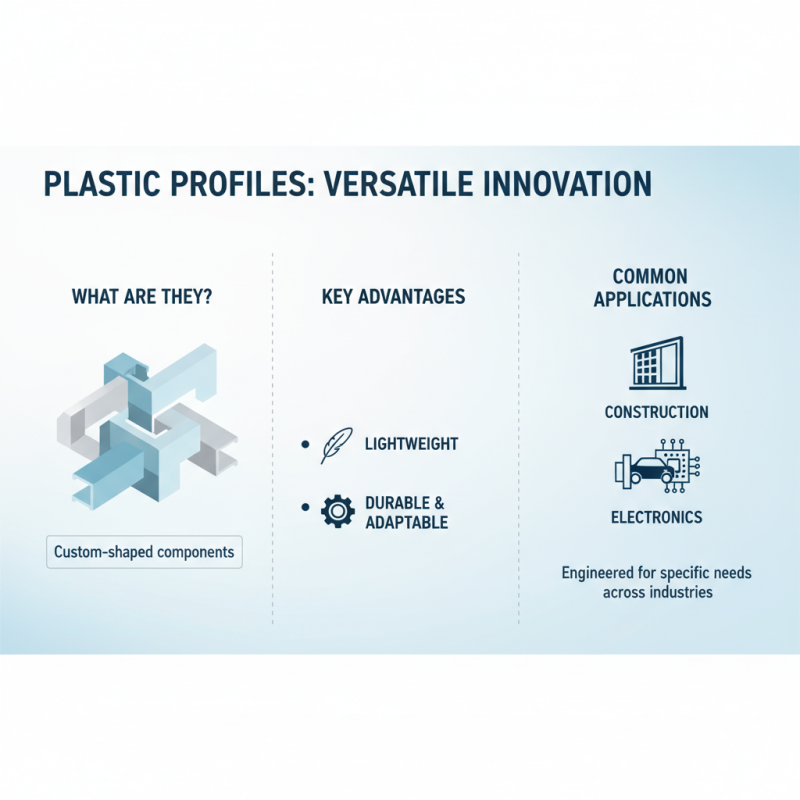
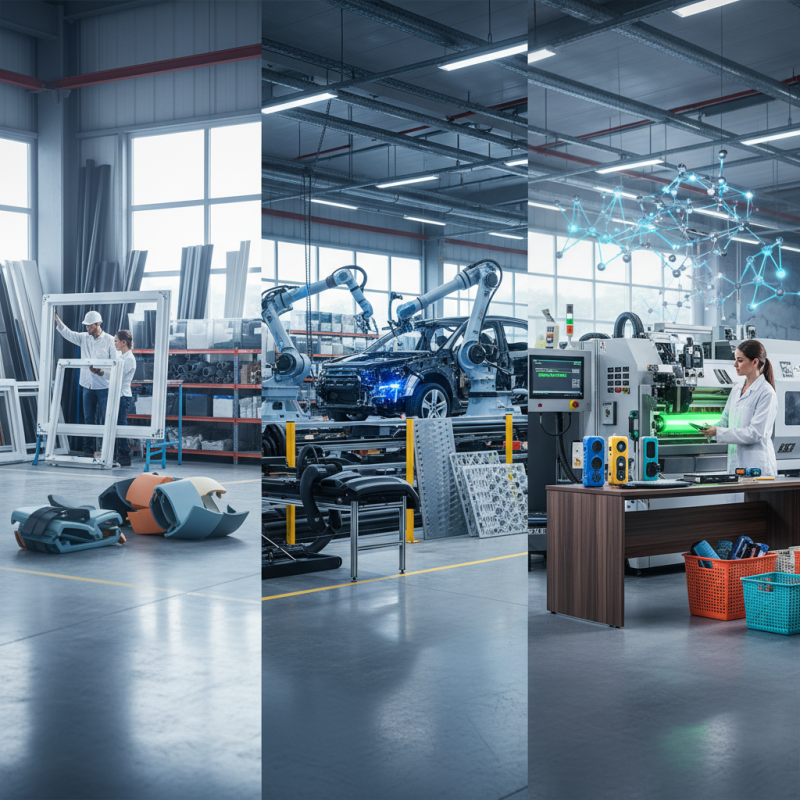
Plastic profiles are versatile components used in various industries. They are formulated from polyethylene, PVC, and other polymers. These materials are lightweight, durable, and resistant to environmental factors. The composition varies depending on the intended application. Fillers, plasticizers, and colorants may be added to enhance properties.
In construction, plastic profiles serve multiple functions. They're used for window frames, doors, and cladding. Their resistance to moisture is essential in these applications. In the automotive industry, plastic profiles contribute to vehicle design and insulation. They can improve energy efficiency and reduce noise. However, the recycling of these materials remains a challenge, with many profiles ending up in landfills.
Despite their practical benefits, plastic profiles can present sustainability issues. Production often involves energy-intensive processes. There is ongoing research to create more eco-friendly alternatives. Not all profiles are recyclable, causing concern in waste management. These factors prompt industries to reassess their material choices. The balance between utility and environmental impact is a constant challenge.
What is Plastic Profiles and How Are They Used in Industry? - Definition and Composition of Plastic Profiles
| Property |
Description |
Common Applications |
| Material Composition |
Plastic profiles are primarily made from PVC, ABS, or polypropylene. |
Window frames, tubing, and enclosures. |
| Durability |
They are resistant to impact, weathering, and chemicals. |
Automotive parts, outdoor furniture. |
| Weight |
Lightweight compared to metal and wood alternatives. |
Packaging, construction materials. |
| Customizability |
Can be manufactured in various colors, shapes, and sizes. |
Signage, decorative elements. |
| Recyclability |
Many plastic profiles are recyclable, reducing waste. |
Reconstruction projects, eco-friendly applications. |
Types of Plastic Profiles Used in Industry
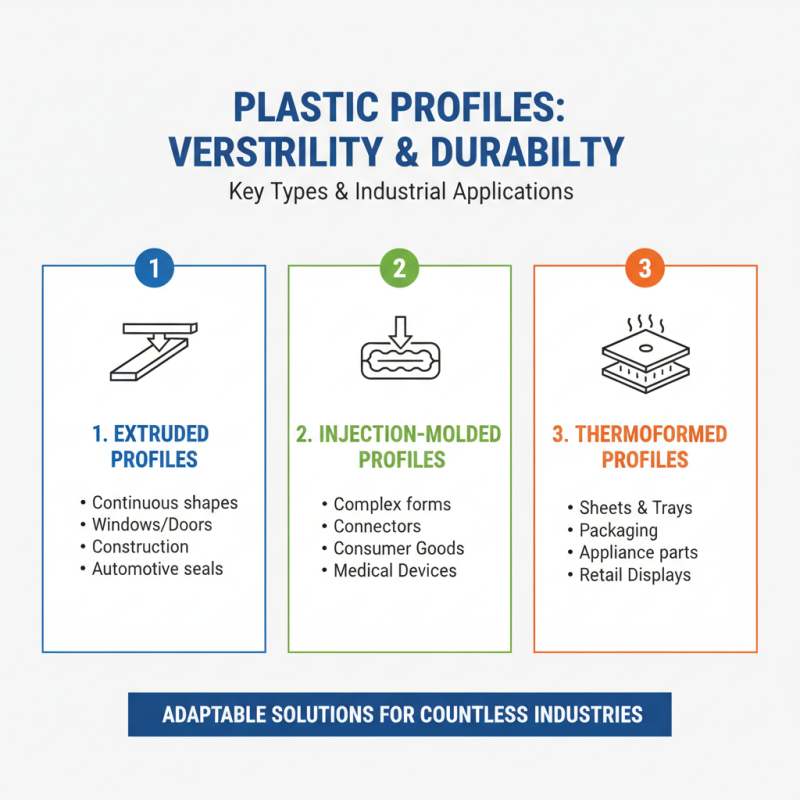
Plastic profiles are widely used in various industries due to their versatility and durability. There are several types of plastic profiles, each serving different purposes. Some common types include extruded profiles, injection-molded profiles, and thermoformed profiles. Each of these adds distinct features to industrial applications.
Extruded profiles are often used in window frames and door seals. They can come in various shapes and sizes. This allows manufacturers to create custom solutions for specific needs. Many industries appreciate their lightweight nature, which reduces shipping costs. However, varying quality can lead to issues with longevity.
Injection-molded profiles are strong and precise. They are common in automotive and electronics industries. These profiles offer complex designs and great durability. However, the initial production setup can be costly. This makes it essential to plan carefully before decision-making.
Thermoformed profiles are another option, often used in packaging and displays. They are easily shaped and can fit various applications. The downside? They may not be as robust as extruded or injection-molded options.
Tips: Always evaluate the specific needs of your project. Consider the environment the profile will be exposed to. Proper material choices can prevent future problems.
Manufacturing Processes for Plastic Profiles
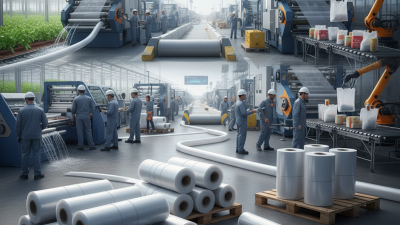
Plastic profiles are essential in various industries, from construction to automotive. They serve multiple functions, such as framing, insulation, and cable management. The manufacturing process for these profiles typically involves extrusion, a method where raw plastic resin is melted and shaped into continuous lengths. Data suggests that the global plastic extrusion market is projected to grow significantly, driven by rising demand in construction and packaging.
During extrusion, the temperature and pressure must be precisely controlled. This step is crucial. An inconsistency in temperature can lead to defects. Companies often face challenges in maintaining uniformity. Moreover, additives are frequently mixed with the raw resin to enhance properties. For example, UV stabilizers can prolong a profile's lifespan in outdoor applications. A recent report highlighted that the addition of such additives increases production costs by about 10%.
Post-extrusion processes include cutting, cooling, and surface finishing. Each stage plays a significant role in the final product's quality. However, not every manufacturer optimizes these processes. There could be improvements in efficiency and waste reduction. Industry studies indicate that around 20% of produced profiles may have to be reworked due to defects. This poses not just a cost issue but also highlights areas for improvement in manufacturing techniques.
Applications of Plastic Profiles Across Various Industries
Plastic profiles are versatile components used in various industries. They are designed in specific shapes to meet different needs. From construction to automotive manufacturing, these profiles offer unique advantages. Their lightweight nature makes them ideal for applications where reducing overall weight is crucial.
In construction, plastic profiles are often used for window frames and roof edges. They provide insulation and resist corrosion. This durability leads to reduced maintenance costs over time. In the automotive industry, plastic profiles can be found in dashboards and interior trims. They help streamline production processes and enhance design flexibility.
However, there are challenges with plastic profiles. Not all manufacturers are aware of the best materials to use for specific applications. Sometimes, profiles may not perform as expected, leading to product failures. It’s important to evaluate the choice of material based on the end use. Attention to detail can make a big difference in their functionality and lifespan.
Benefits and Challenges of Using Plastic Profiles
Plastic profiles are crucial in various industries, from construction to automotive. They offer multiple benefits, but they come with challenges. According to a recent industry report, the plastic profile market is projected to grow by 4.5% annually. This growth highlights their increasing importance.
One major benefit is versatility. Plastic profiles can be molded into numerous shapes and sizes, allowing for custom solutions. They are lightweight yet strong, reducing transport costs. However, companies face challenges in sustainability. Plastic waste remains a significant concern. The industry must seek recycling solutions to minimize environmental impact.
Tip: Consider sourcing recycled plastic profiles to enhance sustainability in your projects. This can help in reducing overall material costs while promoting eco-friendliness.
While durability is a key advantage, not all plastic profiles withstand extreme temperatures. Businesses need to test materials carefully. Not addressing these limits can lead to
project failures.
Tip: Regularly review industry reports to stay updated on material advancements. Knowledge is crucial for making informed choices.