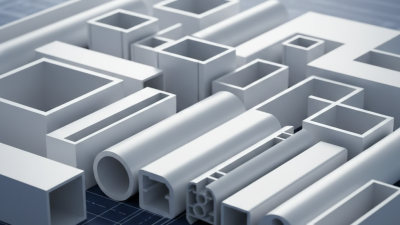
What is an Acrylic Cylinder Tube and Its Uses?
Acrylic cylinder tubes have become increasingly popular across various industries. They are lightweight, durable, and versatile. According to a recent report from the Global Acrylic Market, the demand for acrylic materials, including tubes, has grown by over 15% in the last year. This growth highlights the importance of acrylic cylinder tubes in manufacturing and design sectors.
Dr. Emily Carter, a leading expert in polymer engineering, states, “Acrylic cylinder tubes offer unparalleled clarity and strength, making them ideal for countless applications.” Industries utilize them for display cases, lighting fixtures, and even industrial purposes. These tubes are not only functional but can also enhance aesthetics. However, there is still much to learn about sustainability in acrylic production.
Moreover, the environmental impact of acrylic production raises concerns. While acrylic might be more affordable and practical, we must consider alternatives. Continuous innovation is essential in this industry. Acrylic cylinder tubes play a vital role, but we should strive for greener solutions in the long run. Balancing performance with sustainability remains a challenge.

What is an Acrylic Cylinder Tube?
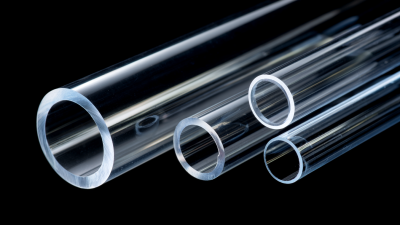
Acrylic cylinder tubes are versatile and durable. They are made from a clear plastic known as acrylic. This material is lightweight yet impacts resistant. Their clarity allows for excellent light transmission. Acrylic tubes can be used in various applications, from art projects to industrial uses.
These tubes are popular in aquariums and displays. They provide structure while showcasing items beautifully. Many artists use acrylic tubes for creative installations. They can also serve practical purposes, like housing LEDs or other electronic components. However, they can scratch easily and may not hold up to intense heat.
In laboratories, acrylic cylinders are also utilized for storage. They offer a lightweight alternative to glass. Yet, without proper care, they can become discolored over time. Using an acrylic tube requires thoughtful consideration, especially regarding maintenance. The benefits are clear, but potential downsides exist.
Key Properties of Acrylic Cylinder Tubes
Acrylic cylinder tubes are versatile and widely used in various industries. They have unique properties that make them suitable for many applications. The first notable property is clarity. Acrylic can transmit up to 92% of light, making it an excellent choice for displays and lighting fixtures. This high transparency allows colors and graphics within the tube to shine through vividly.
Another important feature is its lightweight nature. Acrylic is much lighter than glass, which makes it easier to transport and work with. This property is significant in settings where weight is a concern, such as in aerospace or portable displays. However, the lightweight aspect can also lead to challenges. For example, acrylic might not withstand heavy impacts without cracking.
Moreover, acrylic has good chemical resistance. It can tolerate various substances, making it suitable for laboratory settings or chemical storage. However, it’s important to note that some strong solvents can damage it. Being mindful of such limitations is crucial in planning its use. Understanding these properties helps in maximizing the effectiveness of acrylic cylinder tubes while minimizing potential pitfalls.
Common Applications of Acrylic Cylinder Tubes
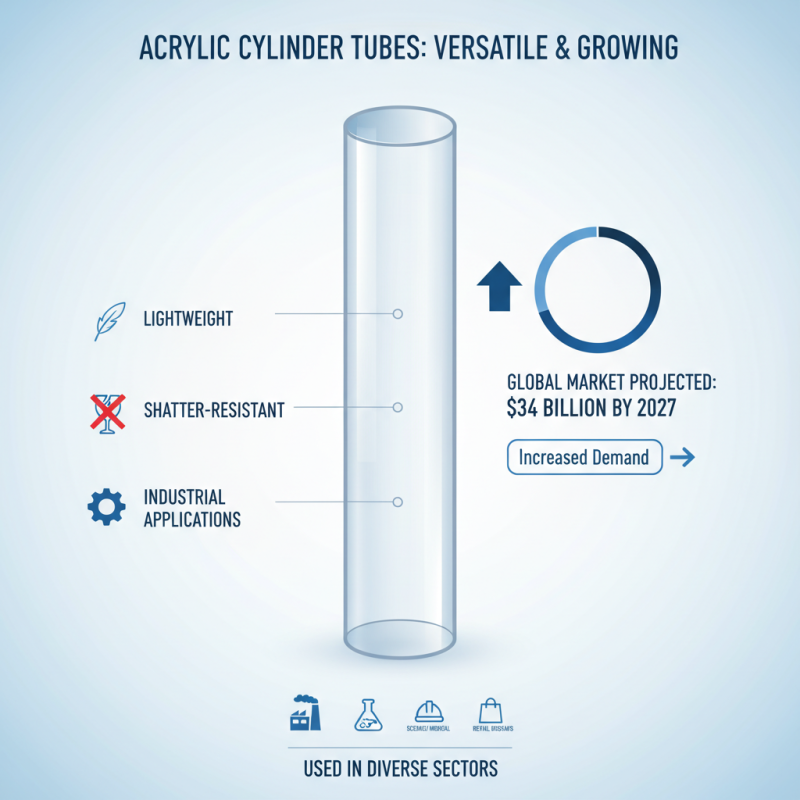
Acrylic cylinder tubes are versatile materials used across various industries. Their lightweight nature and resistance to shattering make them ideal for applications requiring durability. According to industry reports, the global acrylic market is poised to reach $34 billion by 2027. This growth indicates a higher demand for products like acrylic tubes in numerous sectors.
In the retail industry, acrylic cylinder tubes find extensive use in displays and showcases. Their clarity highlights the products inside. Retailers often use these tubes for both aesthetics and security. For example, a store might use an acrylic tube to showcase limited edition items while protecting them from damage. These tubes can be custom-made in various sizes, enhancing their appeal for unique design requirements.
In the scientific field, acrylic tubes are frequently used for demonstrations and experiments. Their optical clarity allows for easy observation of contents. This characteristic is crucial for educational purposes. However, these tubes can have limitations under extreme conditions, such as high temperatures. Innovations are ongoing, but challenges remain in enhancing their resilience.
Advantages of Using Acrylic Over Other Materials
Acrylic cylinder tubes have gained popularity thanks to their unique properties. The advantages of using acrylic over glass or other materials are significant. Acrylic is lighter, which makes it easier to handle. This is crucial in large projects where weight can be an issue. Additionally, acrylic tubes are shatter-resistant. This property can prevent accidents, especially in public spaces.
Another benefit lies in the clarity of acrylic. It allows for up to 92% light transmission. This means projects requiring visibility can thrive with acrylic. In displays, for instance, acrylic allows light to pass through beautifully, showcasing items effectively. However, caution is needed with scratching. Acrylic can scratch easily compared to glass, which requires careful handling.
Acrylic tubes are also more versatile in terms of design. They can be molded into various shapes and sizes. This flexibility opens doors for creative applications in different industries. However, the environmental impact of acrylic production is a concern. Ensuring sustainable practices in sourcing and manufacturing is essential. It's a challenge that often goes overlooked, and it's crucial to consider.
Maintenance and Care for Acrylic Cylinder Tubes
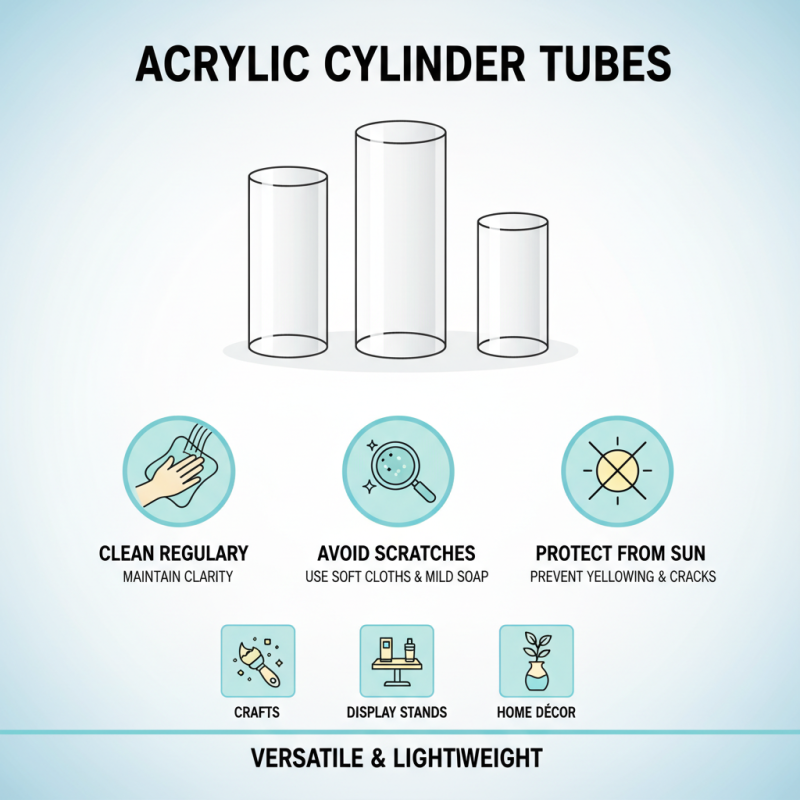
Acrylic cylinder tubes are versatile and lightweight. They’re widely used in crafts, display stands, and home décor. However, proper maintenance is crucial for their longevity. Regular cleaning helps maintain clarity.
To wash your acrylic tube, use mild soap and warm water. Avoid harsh chemicals and abrasive materials. They can scratch the surface. Rinse thoroughly and dry with a soft cloth. This simple routine keeps your tubes looking new.
Tips: Always store acrylic tubes in a cool, dry place. Direct sunlight can cause yellowing over time. Consider using a protective cover if you’re displaying them.
For deeper scratches, try a fine polishing compound. Be cautious; it can be easy to overdo it. Reflect on your cleaning methods. Are you caring for them properly? Regular checks can prevent bigger issues down the line.