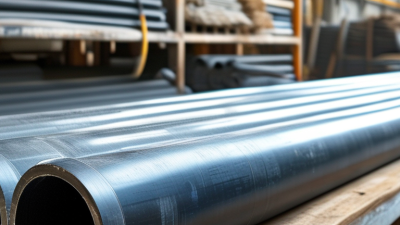
2026 Best Plastic Tubing Manufacturers for Global Buyers
Choosing the best plastic tubing manufacturer in 2026 requires more than comparing prices. Global buyers need verified materials, stable dimensions, clean production, and dependable delivery. A tube may look simple on a factory floor. Its inner diameter can still change under heat, pressure, or repeated bending.
Industry reports show why this market deserves careful evaluation. Grand View Research identifies medical, industrial, and automotive applications as major growth areas for plastic tubing. MarketsandMarkets also highlights rising demand for high-performance polymers, including fluoropolymers, silicone alternatives, and engineered thermoplastics. Their market estimates differ. That difference matters. Report boundaries, regional coverage, and product definitions are not always consistent.
Tim A. Osswald, a respected polymer-processing professor, has emphasized that “plastic processing is both a science and an art.” The principle applies directly here. Resin selection, extrusion temperature, tooling accuracy, and cooling control can shape final performance. Certification alone is not enough.
Look closely.
A reliable manufacturer should provide traceable material records, dimensional inspection data, pressure testing procedures, and realistic lead times. Buyers should also examine production samples, not only glossy catalogs. One overlooked detail can become a costly failure inside a catheter, pneumatic line, fuel system, or laboratory instrument.
This guide compares leading manufacturers through a practical global-buyer lens. It considers technical capability, quality systems, customization, export experience, and responsiveness. The ranking is not absolute. Supplier suitability depends on application, region, volume, and risk tolerance. That is the part many market lists simplify too much.
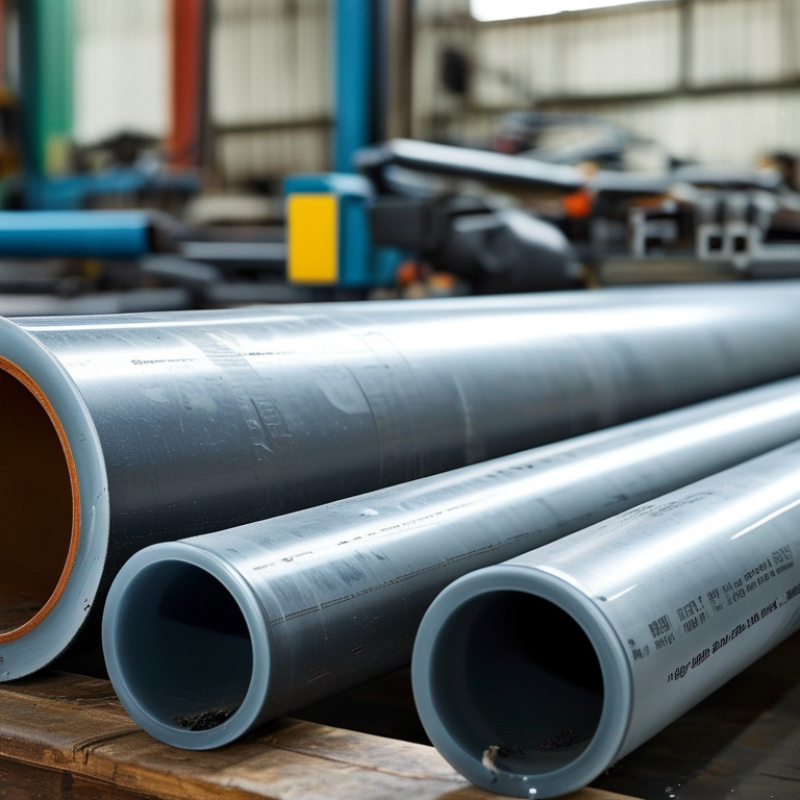
Plastic Tubing Market Overview for Global Buyers in 2026
Global demand for plastic tubing continues to expand across medical, industrial, laboratory, and fluid-handling applications. Grand View Research estimates the global medical tubing market will grow at approximately 9% annually through 2030. Its 2024 analysis highlights catheter systems, diagnostic equipment, and minimally invasive procedures as major demand drivers. These figures suggest strong opportunities for qualified manufacturers, but growth is uneven across regions.
Material selection remains practical, not decorative. Polyurethane offers flexibility, while fluoropolymers support chemical resistance and higher operating temperatures. Buyers should check wall thickness, inner diameter tolerance, pressure ratings, and batch traceability. A tube that looks clear under showroom lighting may still kink during repeated bending. Small differences matter.
The Freedonia Group’s global plastic pipe research reports continued volume growth in infrastructure and industrial uses through 2028. However, tubing buyers often face different risks than pipe purchasers. They need stable extrusion, clean packaging, reliable cutting, and documented testing. ISO 13485 may be relevant for medical applications, while food-contact requirements vary by destination. Certification alone is not enough. Factory audits and sample testing remain necessary.
I would not treat every market forecast as precise. Exchange rates, freight costs, recycling policies, and regional construction cycles can change purchasing decisions quickly. A realistic 2026 sourcing plan should compare landed cost, lead time, material consistency, and technical support together. Forecasts guide decisions; production evidence should confirm them.
Key Types and Applications of Plastic Tubing
Plastic tubing serves very different jobs, from delicate medical lines to rigid industrial conduits. Common types include PVC, polyurethane, silicone, polyethylene, and fluoropolymer tubing. Each material changes flexibility, temperature resistance, chemical compatibility, and service life.
Medical tubing often requires smooth inner walls, low extractables, and reliable sterilization performance. It appears in fluid delivery, laboratory equipment, drainage systems, and diagnostic instruments.
Industrial tubing carries air, water, chemicals, fuel, and abrasive materials. Polyurethane handles repeated bending well, while fluoropolymer tubing suits aggressive chemicals and higher temperatures. Silicone remains useful where flexibility and wide temperature tolerance matter.
The PlasticsEurope Plastics—The Fast Facts 2024 report recorded 413.8 million tonnes of global plastics production in 2023. This scale supports broad tubing supply, but volume does not guarantee quality. Grand View Research identifies healthcare as a major growth area for medical tubing, driven by minimally invasive procedures and diagnostic equipment.
Buyers should check pressure ratings, wall thickness, burst strength, and dimensional tolerances. They should also request test data for chemical exposure and sterilization cycles. A transparent tube is not automatically compatible with every liquid. That mistake remains common. Smaller diameters can also create unexpected flow loss, especially with viscous fluids. Real-world trials matter more than attractive specifications.
How to Evaluate Plastic Tubing Manufacturers
Choosing a plastic tubing manufacturer requires more than comparing unit prices. In real sourcing work, a polished website can hide inconsistent production controls. Ask which polymers are used, how resin lots are traced, and whether dimensions are checked during extrusion. Request recent inspection records, not only a capability sheet. A reliable supplier should explain tolerance limits in plain language. They should also identify the test method.
Match the factory to the tubing’s working conditions. Confirm pressure, temperature, chemical exposure, flexibility, and expected service life. Ask for samples from a normal production lot, then measure inner diameter, wall thickness, and surface finish. A sample is useful, but not proof. Test it under your own conditions when possible. Check whether the manufacturer can provide material declarations and certificates required for your target market. Records should show dates, lot numbers, and responsible personnel.
Evaluate process discipline through a remote or on-site audit. Look at calibration labels, clean storage, sealed packaging, and how nonconforming tubing is isolated. Discuss minimum order quantities, lead times, tooling ownership, and change-notification procedures before signing. Communication matters when a drawing changes by a fraction of a millimeter. No supplier is flawless. I have seen evaluations focus heavily on price and overlook packing damage during transit. That mistake is expensive. Leave room for a second sample review, because the first result may not represent routine output.
2026 Best Plastic Tubing Manufacturers for Global Buyers - How to Evaluate Plastic Tubing Manufacturers
| Evaluation Dimension | What a Strong Manufacturer Should Offer | Recommended Buyer Requirements | Verification Documents or Tests | Priority |
|---|---|---|---|---|
| Material Selection | Access to application-appropriate thermoplastics such as polyethylene, polypropylene, polyurethane, polyvinyl chloride, fluoropolymer, polyamide, or thermoplastic elastomer. | The material must match the required flexibility, chemical resistance, temperature range, pressure rating, and regulatory conditions. | Material specification sheet, safety data sheet, resin traceability records, and application compatibility review. | Critical |
| Dimensional Control | Consistent control of inner diameter, outer diameter, wall thickness, ovality, and cut length throughout production. | Request drawings with tolerances and define inspection frequency for each critical dimension. | Dimensional inspection reports, calibrated gauge records, first-article inspection, and sampling plans. | Critical |
| Pressure Performance | Pressure ratings based on tube size, material, wall thickness, temperature, and service conditions rather than a single universal value. | Require working pressure, burst pressure, vacuum rating, and applicable safety factor for the intended operating temperature. | Hydrostatic pressure test, burst test, vacuum test, and pressure-versus-temperature derating data. | Critical |
| Temperature Resistance | Clearly defined continuous-use and short-term temperature limits for the finished tube. | The stated range should cover both minimum storage or operating temperature and maximum process temperature. | Technical data sheet, thermal aging results, low-temperature flexibility test, and elevated-temperature pressure test. | High |
| Chemical Compatibility | Documented resistance information for oils, fuels, solvents, acids, alkalis, cleaning agents, and process fluids. | Compatibility should be evaluated using the actual fluid concentration, exposure time, temperature, and pressure. | Chemical immersion testing, weight and dimension change records, tensile retention data, and compatibility chart. | Critical |
| Manufacturing Capability | Stable extrusion, co-extrusion, corrugation, braiding, reinforcement, printing, cutting, flaring, and assembly capability where required. | The supplier should demonstrate capacity for the required tube construction, diameter range, annual volume, and production schedule. | Process flow chart, equipment list, production capacity statement, sample approval, and manufacturing audit. | High |
| Quality Management | A documented quality system covering incoming materials, process controls, final inspection, nonconformance handling, and corrective actions. | Quality responsibilities, acceptance criteria, change-control procedures, and complaint-response times should be agreed in writing. | Quality certificate, internal audit summary, inspection plan, corrective-action records, and batch release procedure. | High |
| Regulatory Suitability | Support for sector-specific requirements in medical, food-contact, laboratory, automotive, industrial, or electrical applications. | Compliance claims must apply to the exact material, color, additives, production site, and finished tubing construction. | Declaration of conformity, extractables or migration data where applicable, restricted-substance statement, and product test reports. | Critical |
| Cleanliness and Contamination Control | Controlled handling, packaging, and storage procedures that limit particles, moisture, oil, biological contamination, or cross-contamination. | Cleanliness requirements should specify acceptable particle levels, packaging conditions, and inspection methods. | Cleanroom or controlled-area records, cleanliness test results, packaging specification, and environmental monitoring data. | High |
| Customization | Ability to adjust diameter, wall thickness, hardness, color, transparency, surface finish, markings, perforations, and end treatments. | Custom tooling charges, minimum order quantity, sample lead time, and engineering-change costs should be disclosed before approval. | Engineering drawings, prototype samples, capability study, tooling quotation, and signed approval samples. | Medium |
| Traceability | Each production lot can be linked to raw material, manufacturing date, machine or line, inspection results, and shipment records. | Traceability should be retained for a period appropriate to the product risk and regulatory requirements. | Lot code format, batch records, certificate of analysis, inspection report, and retention policy. | High |
| Testing and Validation | Testing should reflect the final tube geometry and intended service conditions, not only the raw material properties. | Agree on test methods, sample quantity, acceptance limits, laboratory responsibility, and requalification triggers. | Test protocols, laboratory accreditation evidence where relevant, validation report, and retained test samples. | Critical |
| Supply Continuity | Reliable access to raw materials, backup equipment or production lines, preventive maintenance, and documented business-continuity planning. | Evaluate capacity, lead-time stability, safety-stock options, alternate materials, and the effect of unexpected demand increases. | Capacity plan, lead-time history, contingency plan, inventory policy, and production schedule records. | High |
| Packaging and Logistics | Packaging protects tubing from crushing, kinking, moisture, ultraviolet exposure, contamination, and deformation during international transport. | Packaging should be suitable for coil length, straight length, container loading, storage duration, and destination climate. | Packaging specification, drop or compression test where applicable, shipping marks, pallet plan, and export documentation. | Medium |
| Total Cost of Ownership | Transparent pricing that accounts for tooling, testing, packaging, freight, minimum order quantity, rejects, and potential field failures. | Compare suppliers using the same specification, Incoterm, currency, forecast volume, payment terms, and quality requirements. | Itemized quotation, tooling ownership terms, landed-cost calculation, warranty terms, and cost-change policy. | High |
| Communication and Technical Support | Responsive engineering support, clear technical English, controlled documentation, and a defined escalation process. | Assess response time, drawing review quality, sample feedback, problem-solving ability, and post-delivery support. | Technical questionnaire, sample-development timeline, communication records, corrective-action response, and service-level agreement. | Medium |
Leading Manufacturer Profiles and Product Capabilities
In 2026, strong plastic tubing manufacturers will be judged by capabilities, not catalog size. MarketsandMarkets projected the global plastic tubing market to grow from about USD 6.7 billion in 2023 to USD 9.4 billion by 2028. This growth favors suppliers with stable extrusion lines and tested materials.
Leading manufacturers usually fall into three profiles. Medical-focused producers offer cleanroom extrusion, tight tolerances, radiopaque compounds, and multilayer tubing. Industrial specialists provide chemical-resistant tubes for fluid handling, automation, and pneumatic systems. Custom engineering suppliers develop braided, co-extruded, corrugated, or heat-shrink tubing. Their profiles should show resin traceability, dimensional inspection, burst testing, and documented change control. ISO 9001 systems matter, but certificates alone prove little. Production evidence matters more.
Tips: Ask for sample reports, not only product brochures. Compare inner diameter tolerance, wall uniformity, pressure ratings, and minimum order quantities. Request aging data for heat, solvents, and ultraviolet exposure. ASTM and ISO test methods improve comparison, although test conditions may not match your real equipment. A supplier may claim global capacity, yet a second-source plan remains sensible. I would also inspect packaging details; dusty or poorly sealed tubing can undermine an otherwise excellent production line.
2026 Best Plastic Tubing Manufacturers for Global Buyers
Product capability benchmark based on typical continuous service-temperature ranges for widely used tubing materials. Actual performance depends on formulation, pressure, wall thickness, chemical exposure, and compliance requirements.
Typical material ranges: PTFE and FEP are selected for broad temperature resistance, silicone for flexibility and high-temperature service, polyurethane for abrasion resistance, and PVC for general-purpose applications.
Global Sourcing, Compliance, Pricing, and Delivery Factors
2026 Best Plastic Tubing Manufacturers for Global Buyers
Global buyers should assess plastic tubing manufacturers beyond catalog range. Start with resin type, inner diameter, wall thickness, flexibility, and temperature requirements. Request production samples, dimensional reports, batch traceability, and clear material declarations. An experienced audit should examine extrusion lines, clean storage, calibration records, and worker controls. Photos help, but an onsite or independent inspection offers stronger evidence. That distinction matters.
Compliance depends on the destination market and the tubing’s intended use. Ask for current test reports, declarations, safety data, and quality certificates from recognized laboratories. Verify that documents match the exact resin, color, size, and production site. Never rely on a generic certificate. Requirements can change, and buyers sometimes overlook packaging or labeling details. That mistake is expensive.
Pricing should include tooling, minimum order quantities, inspection fees, packaging, freight, duties, and currency risk. A low factory quote may not deliver the lowest landed cost. I have seen small diameter changes create unexpected tooling charges.
Delivery reviews should cover monthly capacity, confirmed lead times, shipping routes, and backup production plans. Keep a practical buffer for port delays and rejected batches. No plan is perfect. Clear contracts, pre-shipment inspections, and milestone payments can still reduce surprises.
Related Posts
-
Top 10 Rigid Plastic Tubing Suppliers Worldwide?
-

Top Uses of Plastic Tubing in Everyday Applications?
-

Top Trends in Rigid Plastic Tubing for 2025 What You Need to Know
-

How to Choose the Right Flexible Plastic Tubing for Your Needs?
-

How to Choose the Right Hard Plastic Tubing for Your Project Needs
-

Why Choose Plastic Tubing for Your Next Project?